-
LTO Batteries, MeshCore and Meshtastic
Lithium Titanate (LTO) batteries are a very good choice for outdoor LoRa nodes. Unlike ordinary Li-Ion or LiPo cells, they can be charged at sub-zero temperatures and have a very long cycle life. There is one important catch, however: their voltage range is completely different from Li-Ion and Li-Pol batteries. A typical 1S Li-Ion battery operates roughly between 3.0 and 4.2 V. A 1S LTO battery has a nominal voltage around 2.4 V and typically operates approximately between 1.5 and 2.8 V. Both MeshCore and Meshtastic now contain low-voltage protection mechanisms which, with their default RAK4631 configuration, can incorrectly interpret…
-
From AFSK to Goertzel
Some time ago I started implementing “classic” packet radio into PacketRF. Not the fancy NPR stuff, not high-speed links, but the old and simple AX.25. The one that runs at 1200 baud over a narrow FM channel and somehow still works over surprisingly long distances. And as soon as I decided to support 1200 baud packet radio (often called PR1200) in PacketRF, I ran into a problem that many people before me had already solved, but I had never really thought about in detail: how do you efficiently decode Bell 202 AFSK on a small embedded system without wasting half…
-
Introduction to the PacketRF Project
For the last few months I have been slowly turning my New Packet Radio experiments into a larger project called PacketRF. It started as a relatively small experiment around New Packet Radio, but over time it became clear that what I actually wanted to build was not only another NPR implementation. What I want is a small, low-cost and reasonably hackable radio networking platform, something that can be used for IP over RF today, but also for more interesting experiments later, especially delay-tolerant networking. This article is meant as an introduction to the project. Not as a release announcement, not…
-
Addressing and ARP in NPR networks
While working on my new NPR firmware for RP2350, I ran into a topic that I honestly had not thought about for many years: ARP. Or, more precisely, how ARP behaves in a network that only pretends to be Ethernet. In the rest of this article I would like to write down a number of notes and ideas that I gathered while studying the original firmware and implementing my own version. Hopefully putting these thoughts into words will help me organise them a bit better. And perhaps it might also help someone else understand a few of the less obvious…
-
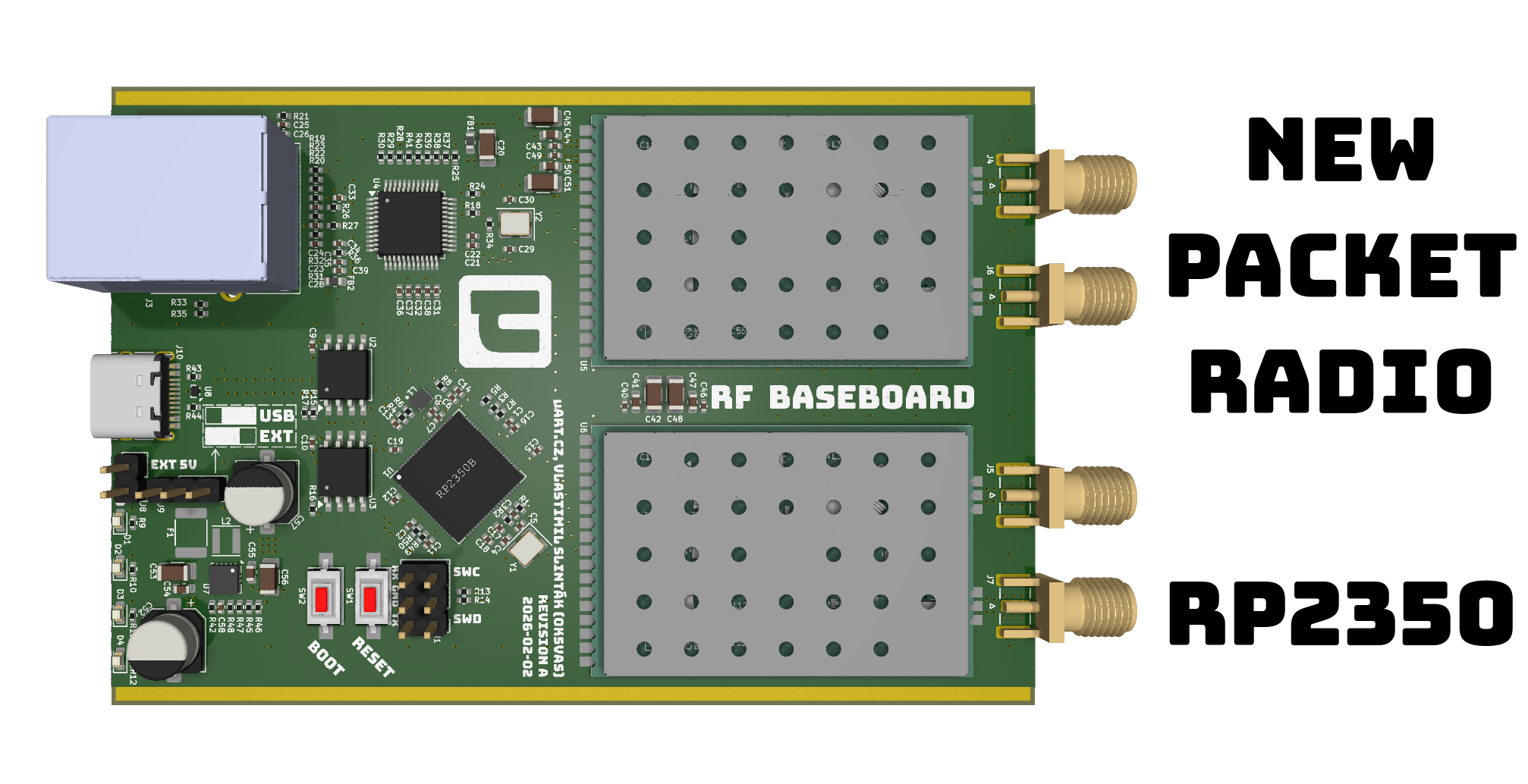
Experiments with NPR: new hardware, firmware, and some cryptography
For the past few months I have been slowly working on the next step of my New Packet Radio experiments. Since the last NPR modem revision B described in my previous article (in Czech), quite a few things have changed. What originally started as a relatively small hardware update gradually turned into something much larger. This article summarizes what I have been doing recently and where the project is heading.
-
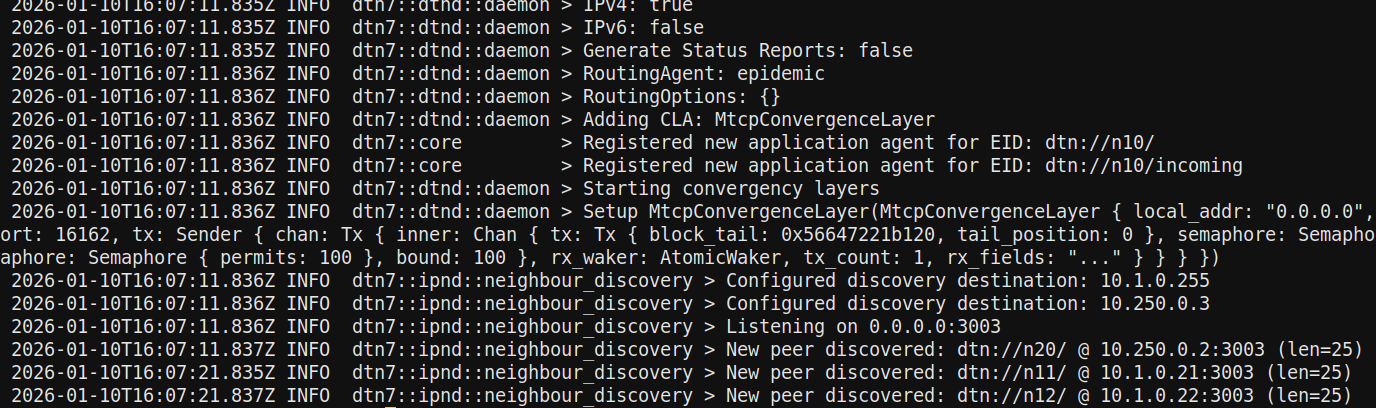
Delay-Tolerant Networking for Amateur Radio
This article is a direct continuation of Rethinking Packet Networks in Amateur Radio. In the first article, we argued that many assumptions inherited from the Internet (continuous connectivity, low latency, conversational protocols) do not hold in real-world amateur-radio environments. Especially in RF systems operating under interference, mobility, duty-cycle constraints, or regulatory limitations, packet networking often fails in subtle but fundamental ways. This second article explores Delay-Tolerant Networking (DTN) as one possible architectural response to these limitations. The goal is not to present DTN as a universal solution, nor to introduce yet another buzzword into the amateur-radio vocabulary. Instead, the aim…
-
Rethinking Packet Networks in Amateur Radio
Over the last decade, amateur radio has experienced a renewed interest in digital communication networks. After years when packet radio felt largely historical, we can see a wide spectrum of new and revived projects: high-speed microwave IP networks, modern packet radio implementations, LoRa-based meshes, and hybrid services combining radio with public Internet infrastructure. We have more bandwidth, more nodes, and more experimentation. Yet behind this progress sits a question that nobody seems to ask: Are we building amateur radio networks on assumptions that fit the amateur radio environment?
-
LinHT – Open SDR Handheld for Radio Amateurs
For the past few weeks, I’ve been working with a small team on a project that I think could become a real game-changer for amateur radio: LinHT. It’s a Linux-based, SDR handheld transceiver, designed as a true open-source alternative to the locked-down radios we’ve all been buying from the big manufacturers. This project is part of the M17 Foundation effort, and while its roots are in the M17 digital voice protocol, LinHT is not tied to a single mode. Thanks to GNU Radio running directly on the radio, you’ll be able to experiment with FM, AM, SSB, TETRA, FreeDV, packet,…
-
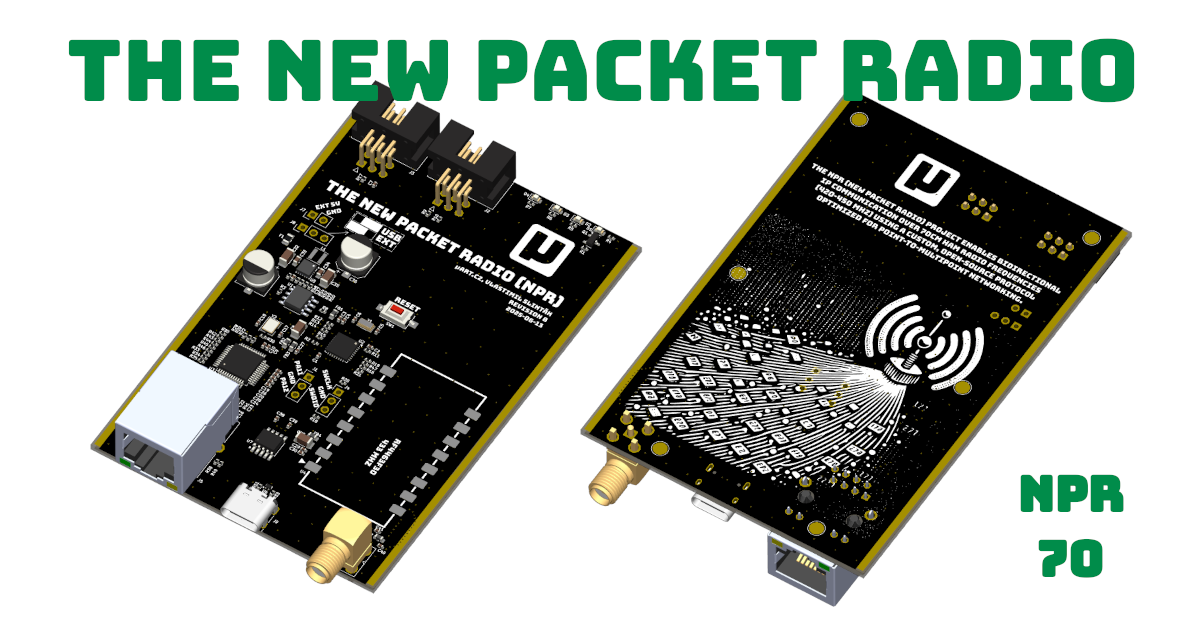
The New Packet Radio
V tomto textu bych česko-slovenské radioamatérské komunitě rád představil projekt New Packet Radio (a taky trochu okrajově i síť Hamnet) a proč mě to zaujalo natolik, že jsem se po letech rozhodl udělat si licenci, navrhnout vlastní PCB a začít s NPR experimentovat. V textu se podíváme na historii, technické parametry i praktické využití NPR a snad se mi podaří vás motivovat natolik, že společně NPR rozšíříme v ČR/SR. Tak pojďme na to.
-

Legenda jménem Game Boy
Toto je přepis mé přednášky o historii a technických detailech legendární herní konzole Game Boy, kterou jsem měl na brněnském Animefestu 24. 5. 2025. Jednou za čas se rád postavím před publikum a povídám o tématech, které jsou mi blízké. Také jsem dlouholetý nadšenec do videoher, mangy (japonský komiks) a pravidelně navštěvuji Animefest. Letos jsem se poprvé rozhodl toto všechno skloubit dohromady a připravit populárně naučnou přednášku právě na zmiňovaný Animefest. Jednak jsem na Game Boy hrách vyrůstal a jednak jsem si nedávno ve volném čase vyrobil hardware emulátor Game Boye postaveného na Raspberry RP2040 čipu, takže mám ještě v…

µArt.cz
Author: Vlastimil Slinták
HAM callsign: OK5VAS